Adventures with Local Turret Clocks N.O8
St Andrews Church, Maple Rd, Surbiton KT6 4DS, United Kingdom
21st December 2025
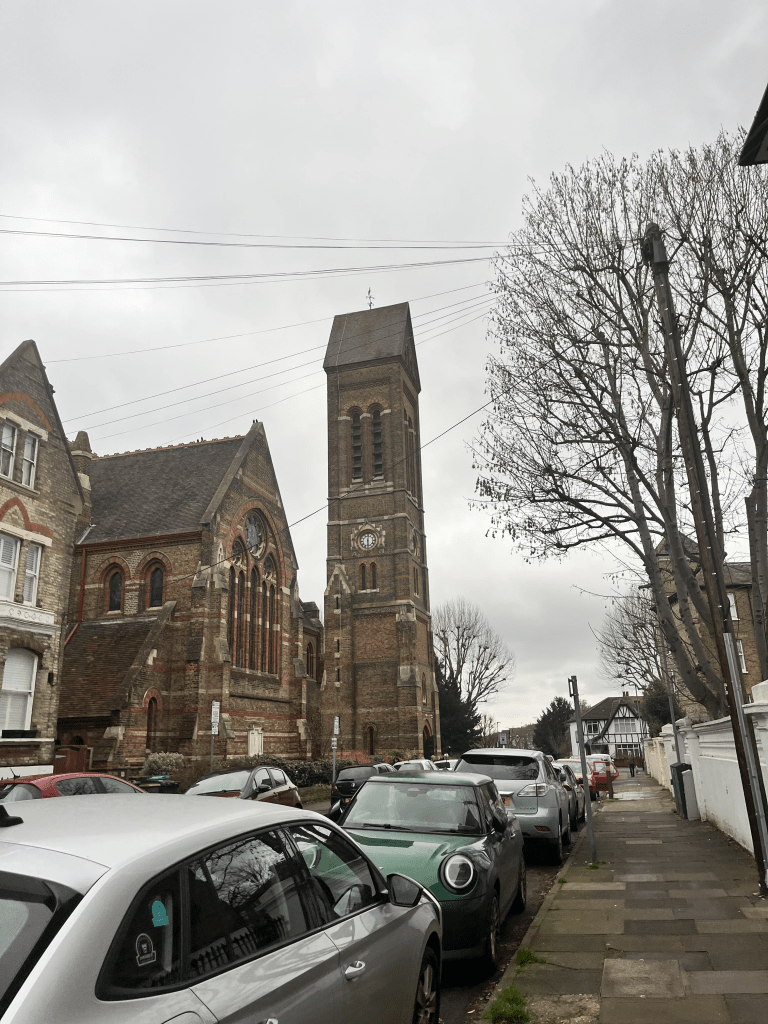
Today’s turret clock trip is a double one! On the 21st December I visited both St Andrews and St Mark’s Surbiton. And so, I’ve decided it’s best to write about each one individually as they are both of course interesting!
We first started our lovely day trip by visiting St Andrews Church in Surbiton. The church, built in 1872 was funded by Angela Burdett Coutts of Coutts bank at the cost of £6,602. It was created as a church for the working class residents living closer to the river in the 19th century, and was subsequently, slightly ‘less’ fancy than the other church in the parish, St Marks.
The church was designed by Sir Arthur W Bloomfield in the ‘Gothic’ style and mainly comprises of brick, a difference from the Kentish Stone churches we have been visiting before!
The tower was actually added in the early 20th century at a cost of £1,400 as a ‘thank you’ offering for the recovery of King Edward VII. Quite an extravagant offering!
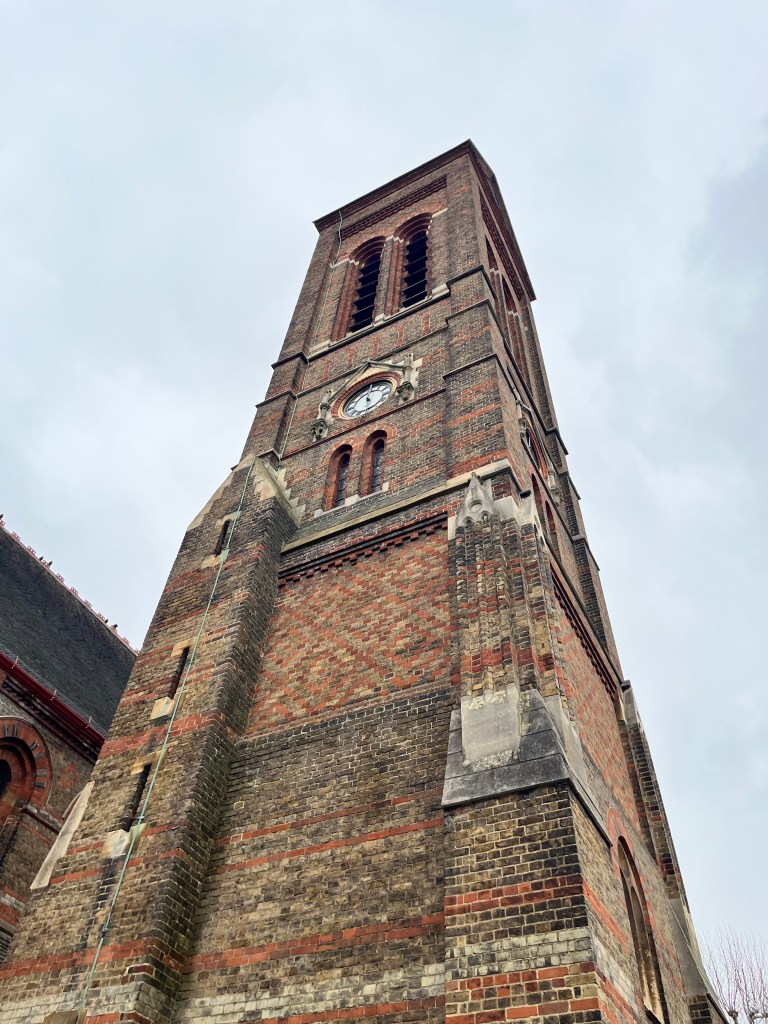
This is a church I had been quite excited for actually. I had always passed by the church and its unusual design had always struck me.
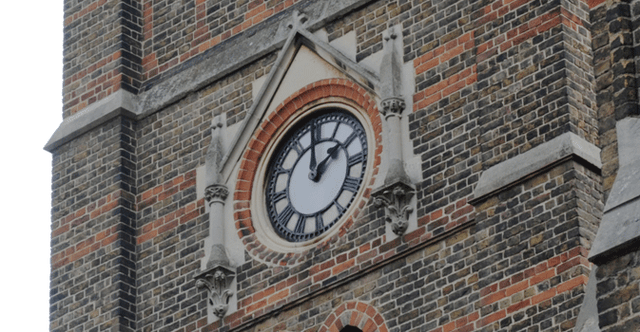
The dials of St Andrews also don’t really show you any indicators of who made them. Usually, you can tell who made the clock by looking at the dials and hands (for example, a Potts dial and hands are usually very recognisable), however whilst the dial at St Andrews does look slightly ‘Potts’ like, it doesn’t really scream anything.
As we entered the church, we were kindly greeted by Martin, who kindly arranged for us to visit both churches.
After entering the church, we were very kindly offered a cup of coffee and a biscuit before we headed up the clock tower to take a look at the clock. Of course both myself and my father jumped at the chance to get some energy before our adventure!
After having a few biscuits, we were greeted by the vicar, Robert, who had been involved in arranging our visit (and I assume taking a look at the logistics of it all, alongside Martin!). We were informed that the clock at St Andrews had actually stopped working the week before, and so not only were we going up to see it, we were going up to fix it.
This was of course… fantastic news! Obviously not fantastic that it wasn’t working, but fantastic that I’d get to see/help work on a turret clock first hand.
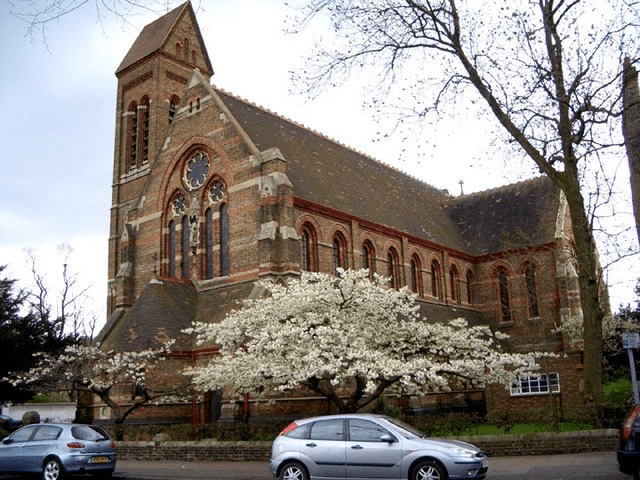
More lovely pics of the church
Making our way to the front entrance of the church, we spied yet another tiny door planted into the side of the tower wall. Opening the door revealed… yes, yet another tiny spiral staircase!
Ascending to the top of this staircase revealed a lovely room containing the long shaft with the pendulum. The pendulum of this clock is incredibly long, not quite sure how long exactly, but it stretches down about a fifth of the tower.
After clambering up another ladder, we were then met with quite an unusual clock mechanism.
The mechanism of St Andrew’s is not one by your average maker (such as John Moore, Thwaites & Reed, Smiths of Derby) but rather is by Caydon & Sons, of Kingston on Thames.
The only information I can find about this particular firm is that they were primarily a jeweller based in Kingston. Not only did they sell various pocket watches (and clocks I suppose), but they also sold other items such as solid silver items, consisting of plates and cutlery.
However, I find it quite interesting that Caydon & Sons, being primarily a jeweller and other small wares retailer/manufacturer, decided to make a turret clock for St Andrews. Unless of course, they stamped their name on someone else’s..
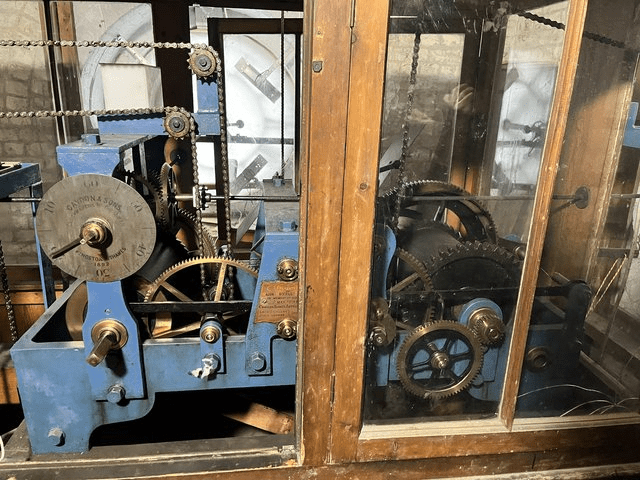
The turret clock movement above looks surprisingly similar to a Thwaites and Reed turret clock from around that period. Whilst Thwaites clocks usually have the part with the setting dial placed in the middle of the clock, the fact that the frame is shaped in this way bears an odd resemblance.
If you take a look below at a thwaites turret clock from around the same period, you will see that it does have a slight similarity to the Caydon & Sons clock, even though the train and overall movement layout is a bit different.
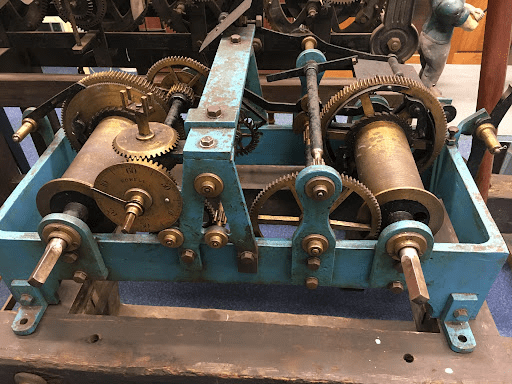
Now that I look at this, it does bear a strikingly similar resemblance.
I find it very odd that a seemingly ‘random’ jewellers firm would volunteer to manufacture a turret clock, with no prior recorded experience, and then proceed to make this the only one that has (currently) been found. Surely if they had the materials and skills to make turret clocks, they would have continued as it is another source of income? Mysteries mysteries!
 Clockman's Adventures!