Adventures with Local Turret Clocks N.O6
St Anne’s Church, Three Colt St, London E14 8HH
Saturday 13th December 2025
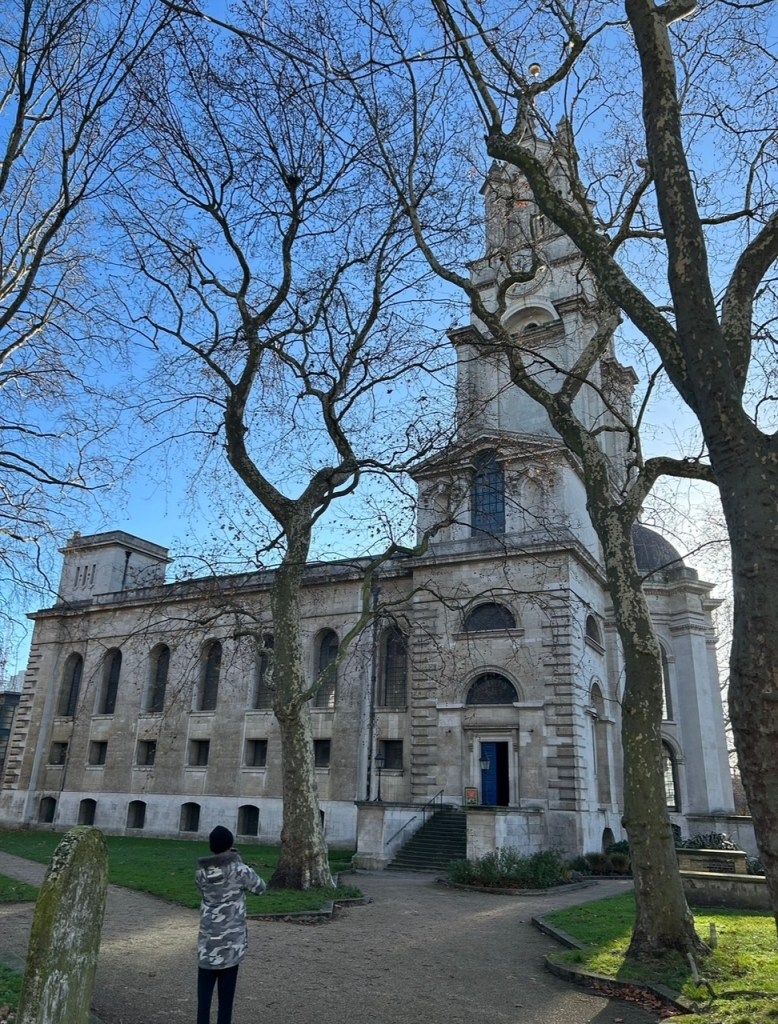
Adventures with Local Turret Clocks continues with a very special clock, slightly further from home.
St Annes Limehouse is the second tallest clocktower in London (The Great Clock of the Palace of Westminster being the tallest), standing at 50 metres tall.
It’s one of the six churches in London designed by Nicholas Hawksmoor who is “considered by many to have been England’s finest Baroque architect” and it was built as a result of Queen Anne’s Fifty Churches Act of 1711 (in which they only got round to building 12).
When the Fifty New Churches Act was put into place, there was an obvious issue over where the funding for all these new churches was going to come from. And so, Queen Anne decided that they would tax all coal coming in from the river Thames in order to fund the buildings
The church itself is a fantastic building. Nicholas Hawksmoor obviously wanted grandeur and so he used every trick in the book to make the building look as big and grand as possible. There’s fantastic huge window of stained glass right to the other end of the church.
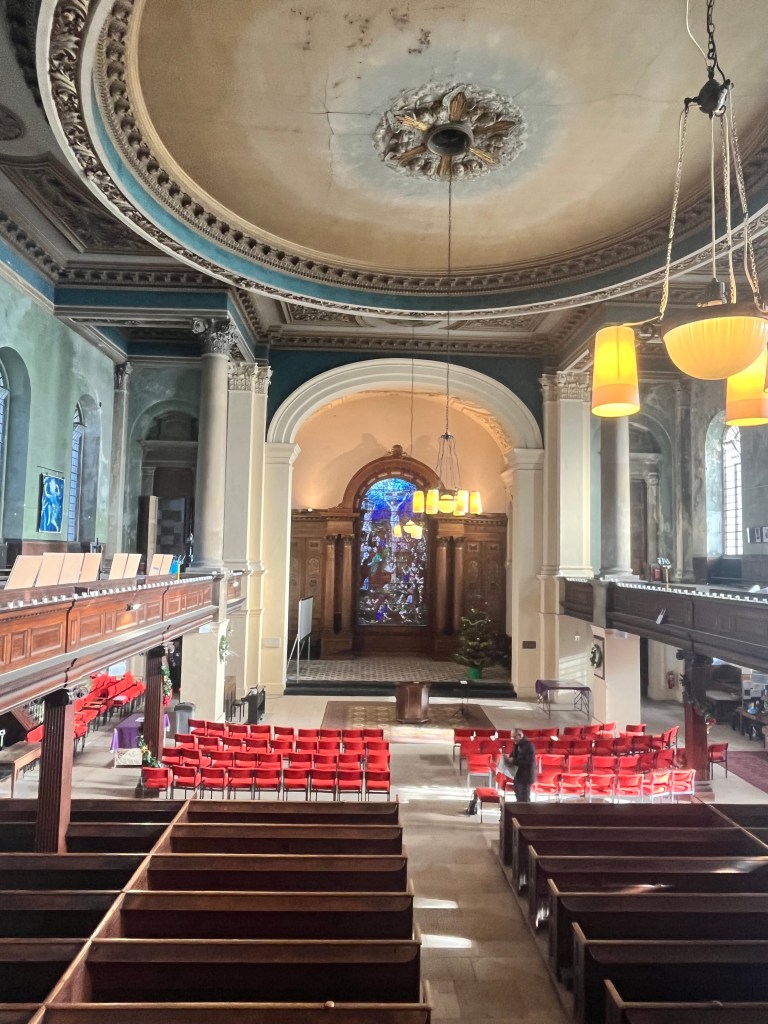
Main church area from the galleries
When I emailed the church asking if it was at all possible to see the clock, I did see the photos and factual information about the clock tower beforehand. However, I think I underestimated the sheer size of the tower.
It’s one of those things where you have to ‘see it to believe it’. It doesn’t look that big from photos online (and quite frankly even the photos I have tried to take to show the size of this tower don’t do it justice) however it really is just… huge!
As me and my father approached Limehouse station on the DLR line to get to the church, we saw a huge tower staring at us from the distance. As you can probably guess, this was St Annes! We both looked, wide mouthed as we passed this building, not knowing really what we had ourselves in for!
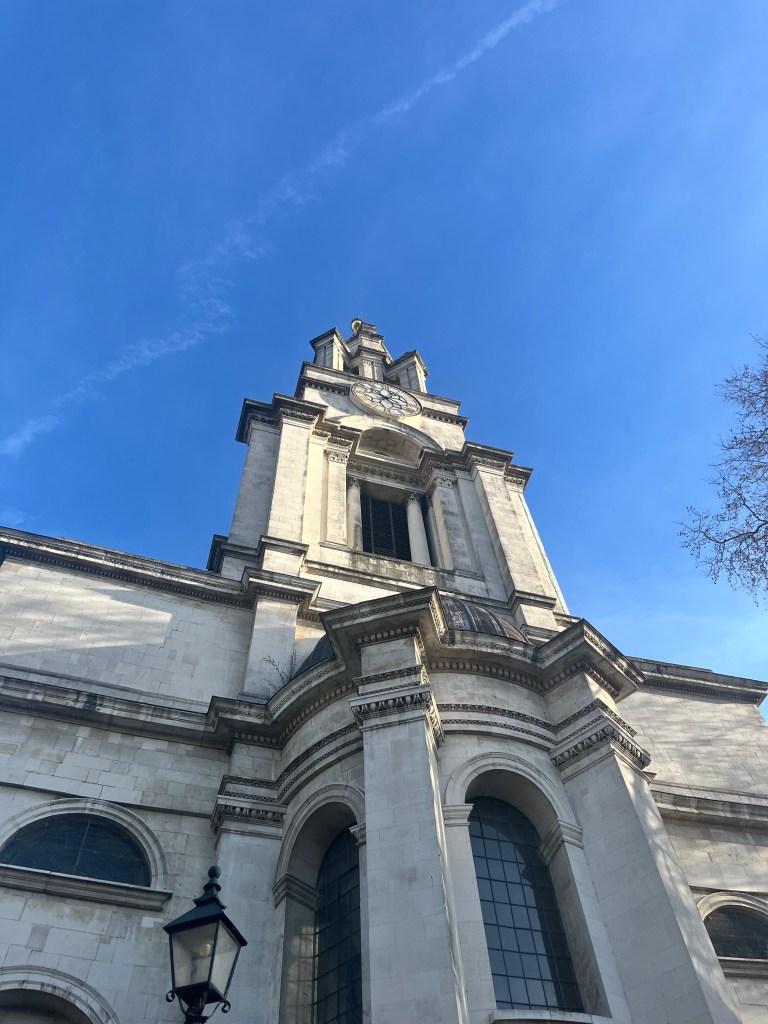
It was a fantastic sunny day and so the clock tower looked great with all the natural light.
Walking into the building, we made our way down into the crypt where we met Robert (the maintenance officer of St Annes), who had kindly agreed to take us up the tower.
The tower entrance is situated in a room to the right of the entrance, as you walk into the church. Entering into this area you see a very old staircase which I believe is original to the 1711 church, in which it survived the “great Limehouse” fire of 1850!
Traversing up the staircase, Robert points us to a door situated halfway up. This indeed was the door that would take us to the top. Opening the door revealed… yet another very small and low spiral staircase (is it just me or am I seeing a reoccurring theme here?!).
Clambering up this tiny stone staircase, we emerge into the bell ringing chamber.
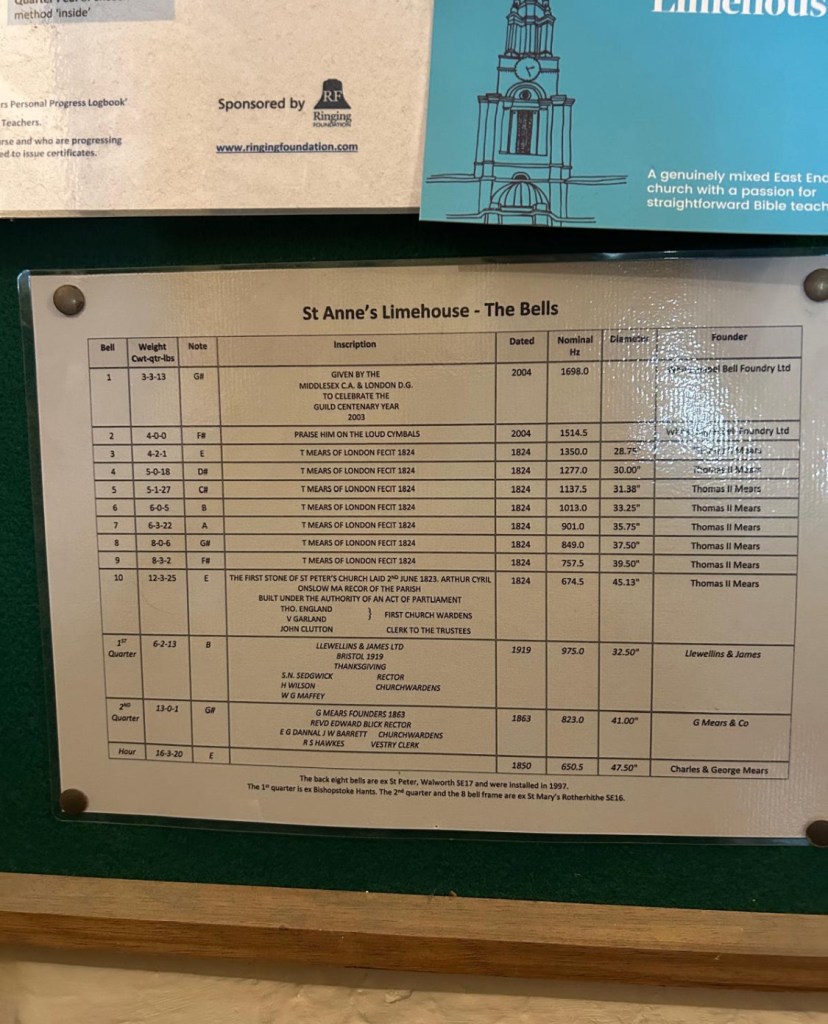
St Annes has a ring of ten bells, two of which were added in 2004 and cast in the Whitechapel Bell Foundry (which has now unfortunately closed). I’ve attached a photo of the bell sheet below
The bell ringing chamber for this church is incredibly large with a huge ceiling! Another church that I would love to ring in if I were a bellringer!
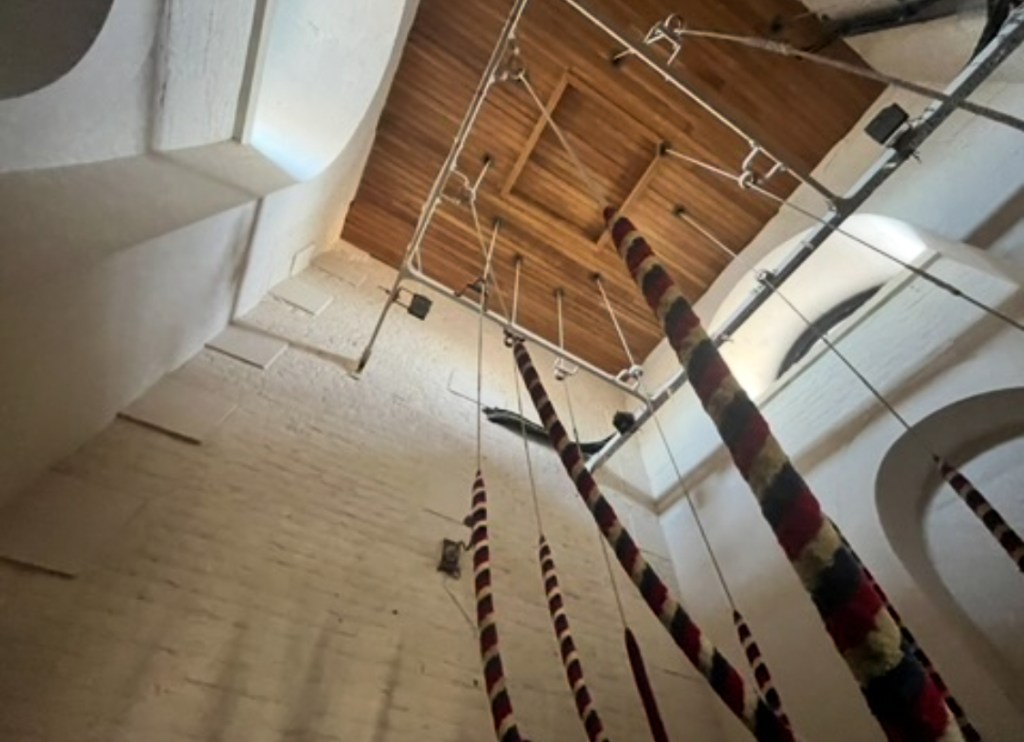
Looking around the room, we notice that the ringing room has 3 other doors to each side of it. One of the doors leads to the half dome at the front of the tower, in which all the supplies to change the flag at the top currently reside in!
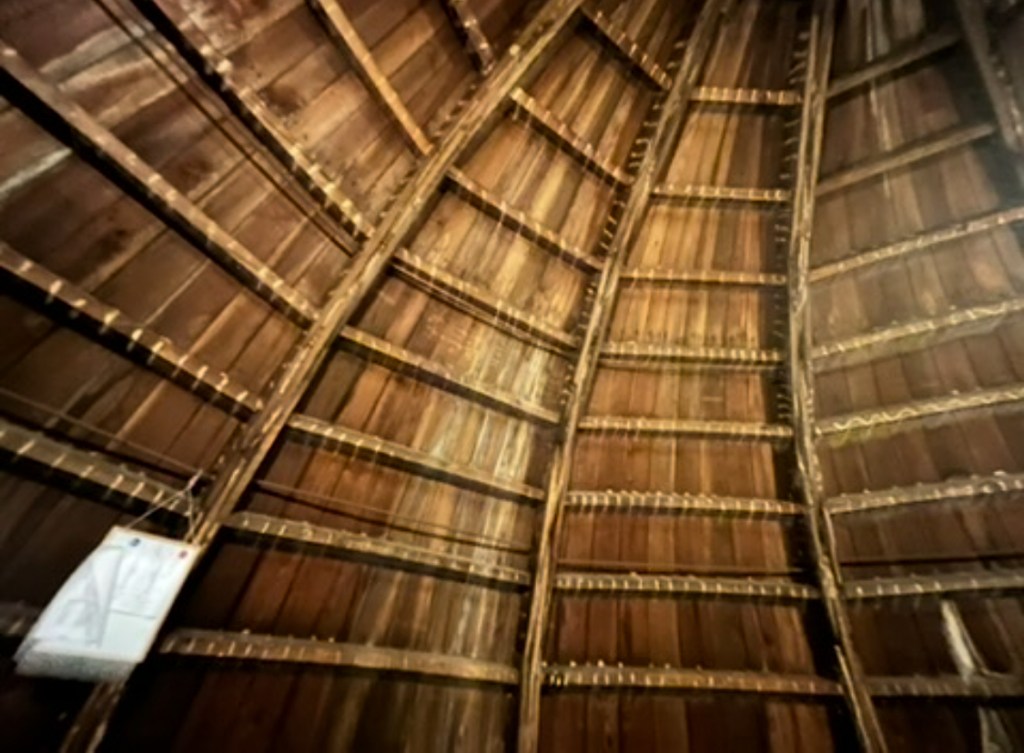
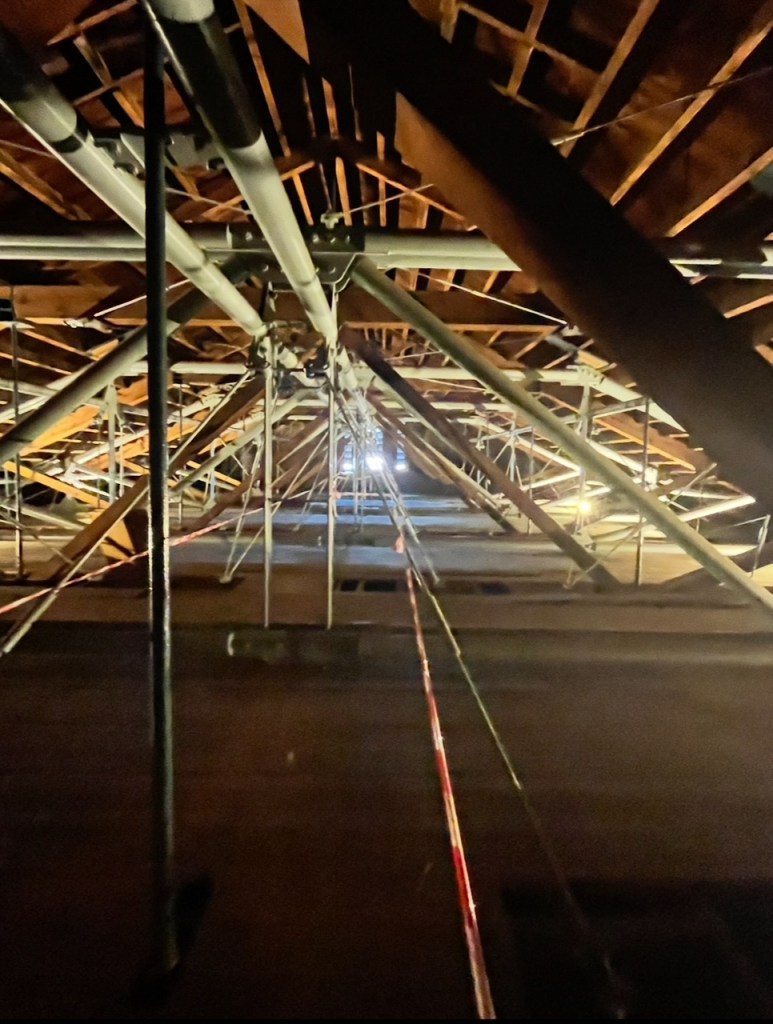
Turning to the left there’s another door that leads into the roof space just above the main part of the church. The metal structural beams are a later addition to help support it.
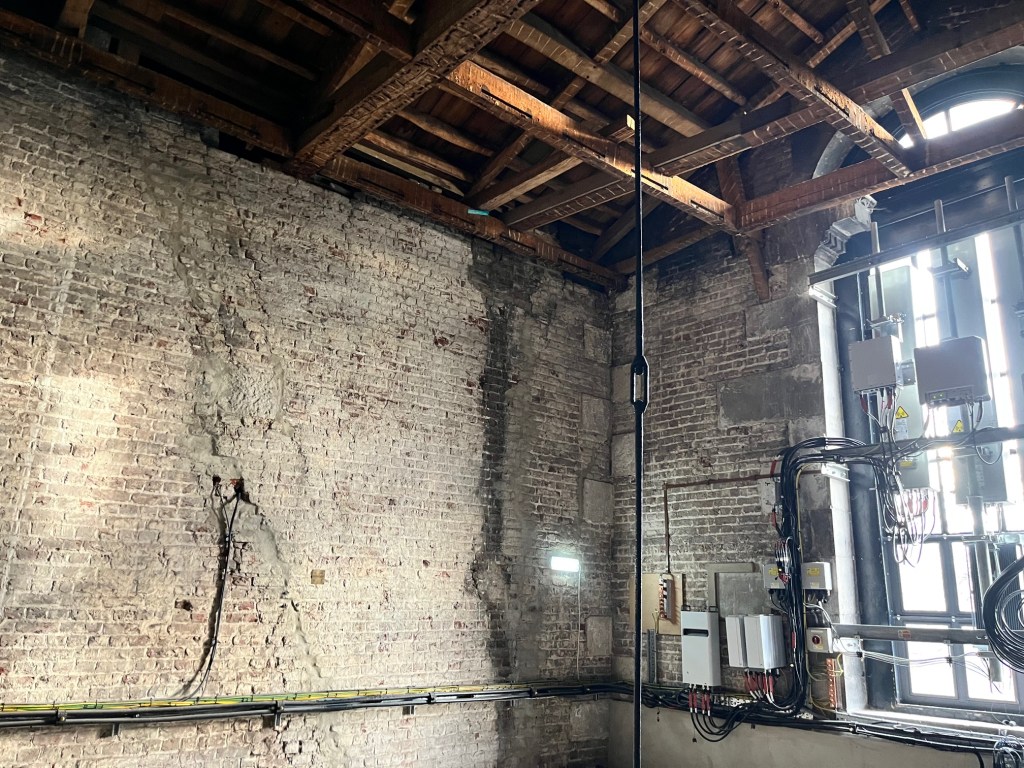
Finally, what is quite interesting about the ‘hidden spaces’ of St Annes is there are a couple of very spacious rooms with quite large windows. I’m not entirely sure what these would have been used for however I can imagine they would make a very nice studio space nowadays!
Turning back to the staircase again, we climb up quite a few more steps, in which the circumference of the tube we’re climbing up somehow gets even smaller! I do feel bad for those Victorians who were a bit taller than the rest, and had to climb up this tower to wind up the clock.
The second stop of our journey is the bell chamber. Rather than all the bells being contained in one room, the bells that are responsible for sounding the hours and quarters are instead contained in their own room.
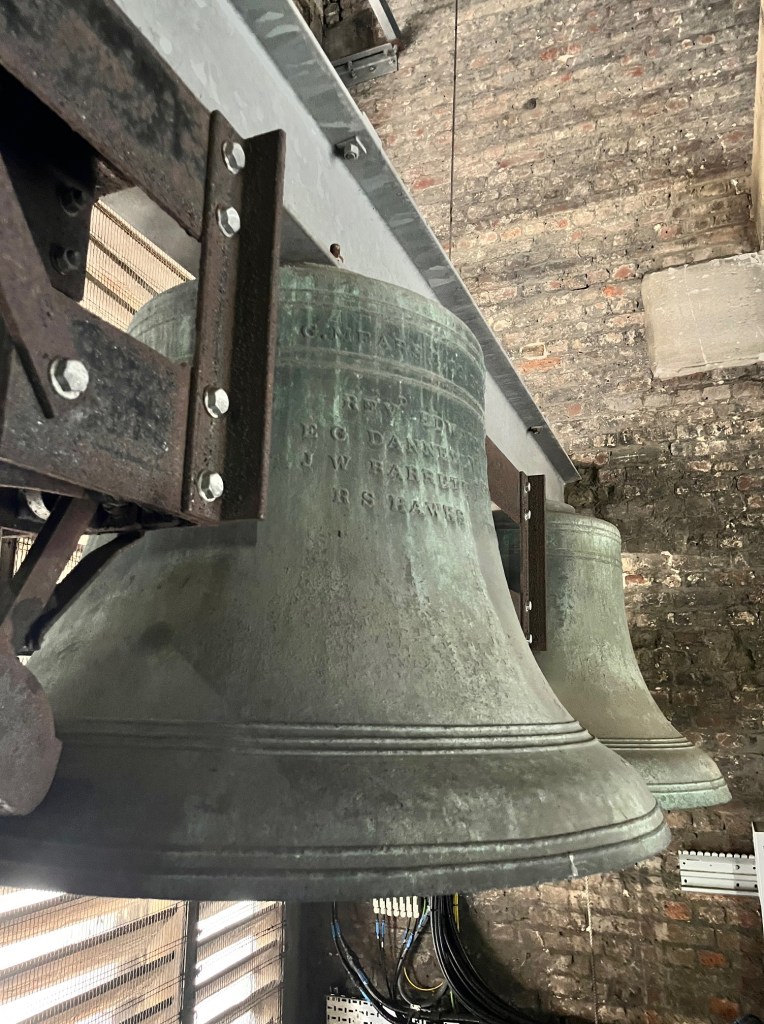
The bells here are fairly large, in which the hour bell weighs 16-3-20 (cwt-qtr-lbs) and is in the note of E.
Whilst we were in this room, I checked my watch and realised that we were 3 minutes to noon. Whilst I very much did want to see the bells strike the hour, I hadn’t brought any proper ear protection and so I thought it was best to see if we can try and catch the clock mechanism do its thing!
We rush up the steps and clamber down (this tower is a labyrinth! up and down, left and right!) into the clock chamber, and then climb up another ladder within it.
There, Robert opens a huge door, in which he reveals an incredibly large 3 train John Moore clock.
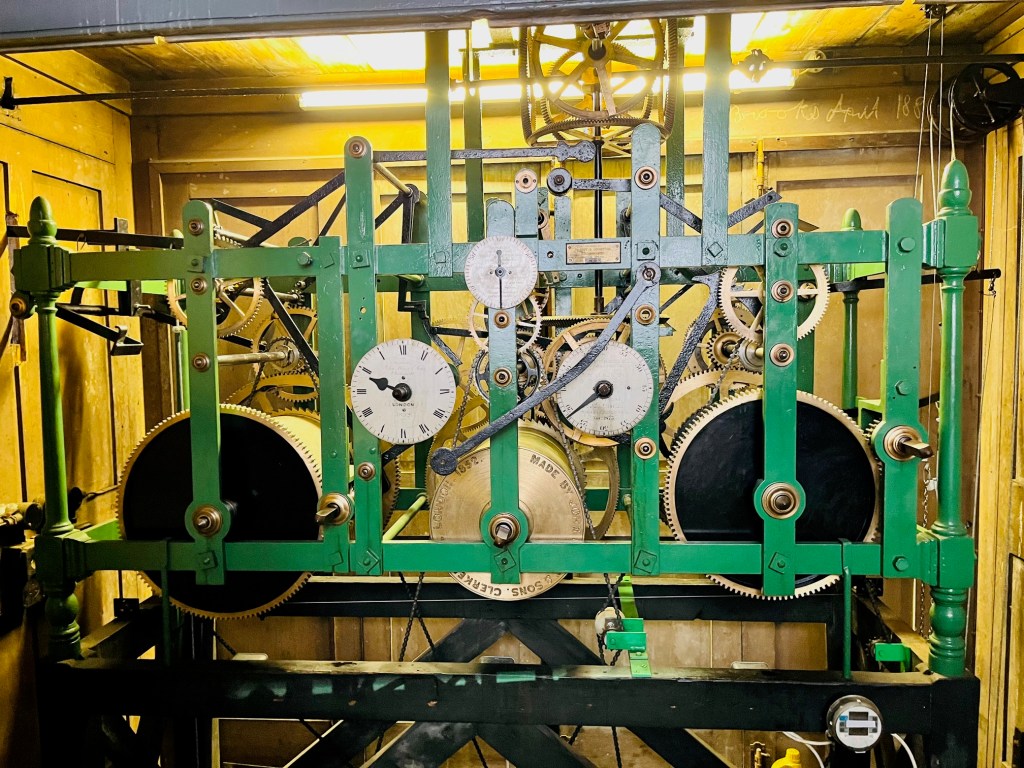
This clock is exceptionally large. It has a length of about 2 metres and a height of about 95cm! It seems to be in wonderful shape too. (It has recently been serviced by the Cumbria Clock Company and so it is very clean and works wonderfully.). It dates from 1852.
I didn’t really have much time to marvel at the sheer size of the mechanism as noon was looming round the corner! As we take a look at the back of the clock, the show starts.
worst photo of the year award?
I hadn’t really realised how close we were to the belfry and so it gave us a bit of a fright when the hammer dropped! I always find it very satisfying to hear the governors of a turret clock bring themselves to a stop after chiming, as well as the racks being lifted.
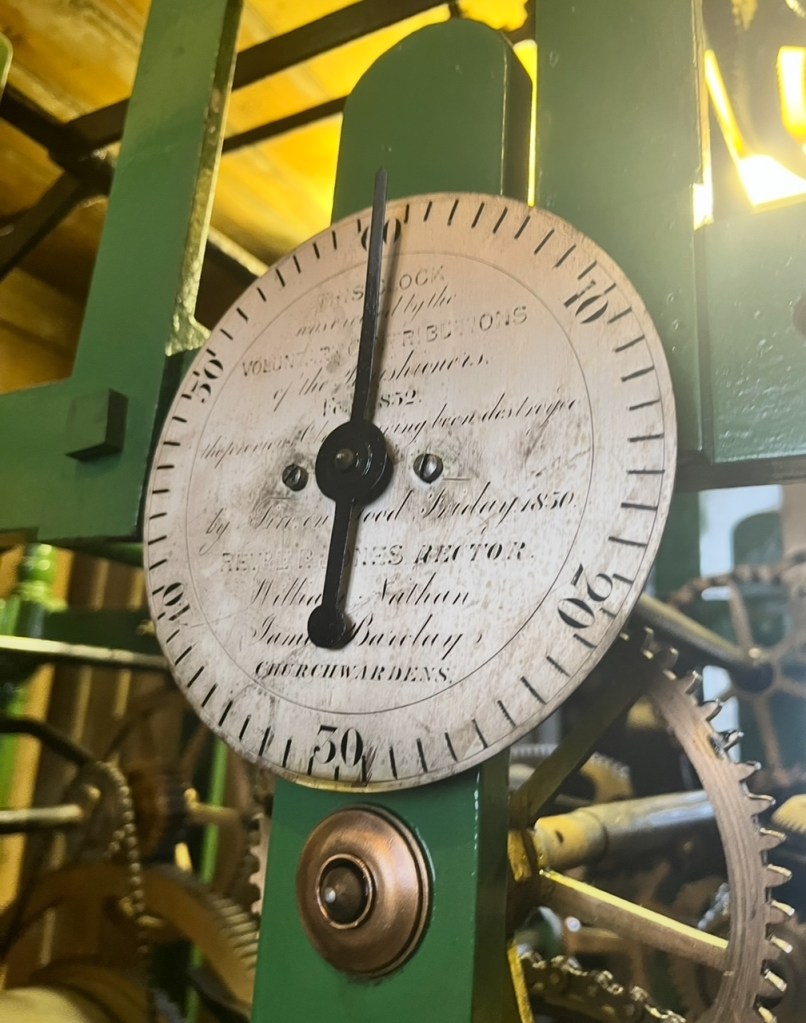
After all that excitement, we took a look at the mechanism a bit closer. The 3 sub dials of the mechanism seem to have a lot inscribed on them. Unfortunately I haven’t taken a closer look at the photos to decipher them just yet, but I promise I will eventually!!
Looking up we see another ladder that seems to lead higher up. We didn’t get a chance to take a peek up there this time (as we hadn’t got harnesses on) however Robert has promised to take us up there eventually!
Unfortunately, our time was up in the tower and now it was time to make the journey back down the staircase.
However… I can confidently say that this isn’t my last expedition over to Limehouse as… I have somehow been made the timekeeper of this tower! It is a huge honour to be the one to keep an eye on and monitor this clock and so whatever is missing in this blog, will be filled in eventually!
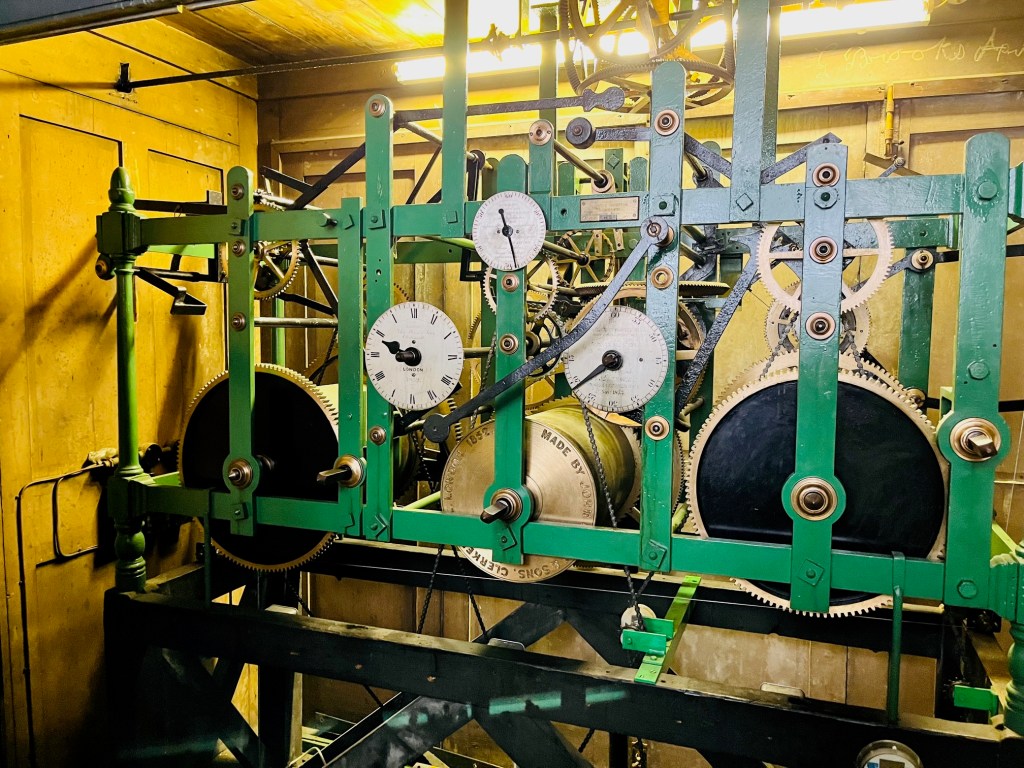
It is an absolutely fantastic piece of engineering and I am so happy that this clock is the first (of hopefully many!) that I am keeping an eye on!
And as we always say.. on to the next one!
 Clockman's Adventures!