Adventures with Local Turret Clocks N.O 3!
W Smithfield, Barbican, London EC1A 9DS
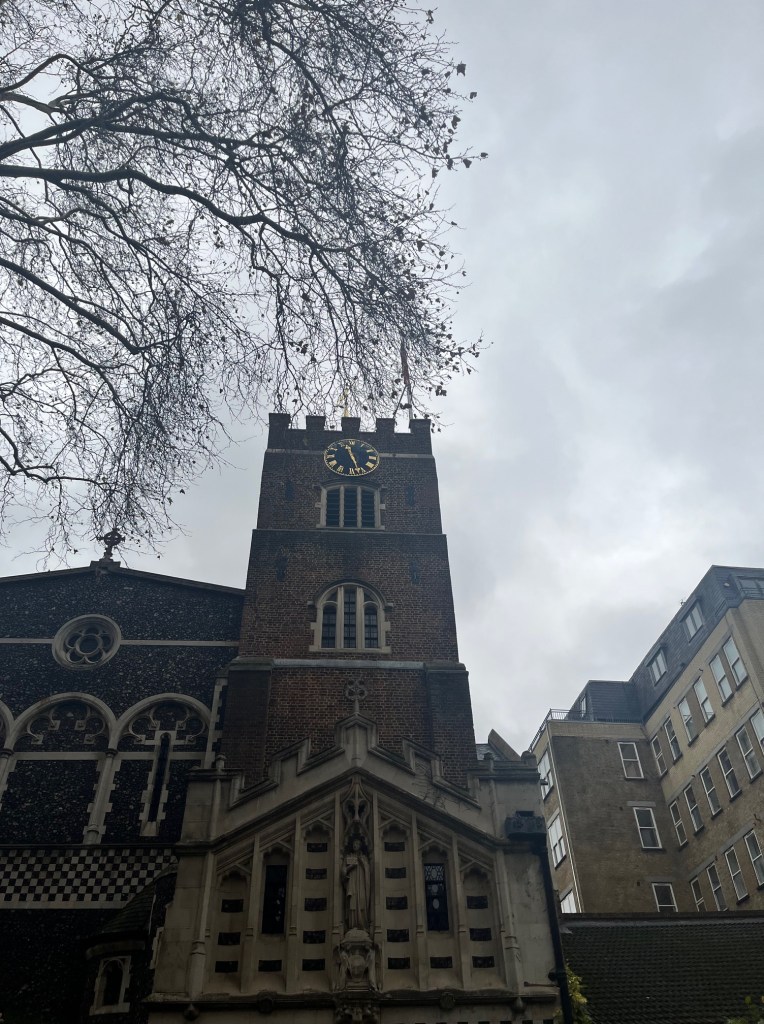
St Bartholomew the Great is a church that I would only describe as a ‘Tardis’. It looks fairly small from the outside but on the inside… its huge!
Founded in 1123 by Rahere (a courtier to King Henry I) it was founded as an Augustinian Priory alongside St Bartholomew’s Hospital (which is the oldest working hospital in Britain).
It’s constructed in the Romanesque Architecture and is London’s oldest parish church. It survived the Great Fire of London and the Blitz during the Second World War.
During the Dissolution of Monasteries (under Henry VIII in the 1530s) the priory was largely destroyed. However the eastern part of the church survived and continued in use as a parish church.
The church had significant Victorian restorations led by Sir Aston Webb. This included structural repairs and also the restoration of the Norman architectural features.
We arrived at the church at about 11:30am and met Gordon who is the Head Verger at St Barts. It was very kind of him to arrange a tour at such short notice.
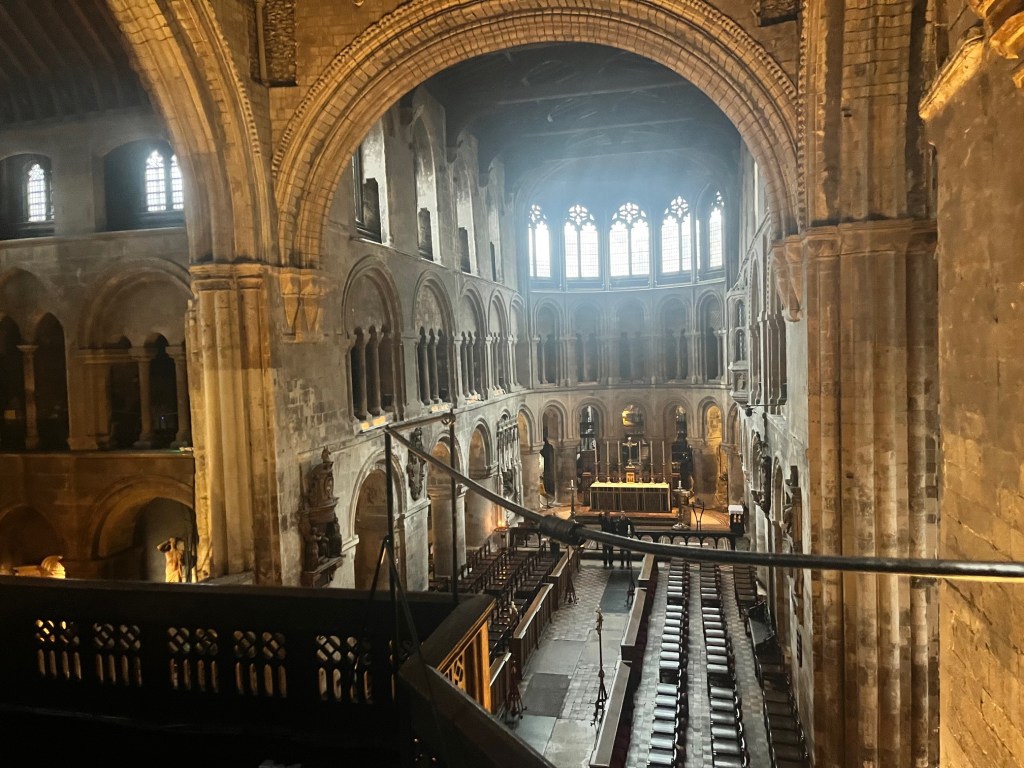
Unfortunately beforehand I hadn’t had the chance to step into St Barts even though I had passed by it many times before. You can imagine my surprise when I saw the beautiful Romanesque architecture inside. The ceilings are much higher than you might think!
We then traversed through a side door near to the entrance of the church, in which a staircase awaited us. This then led us up to one of the upper galleries from which a very astonishing sight could be beheld. (See pics below)
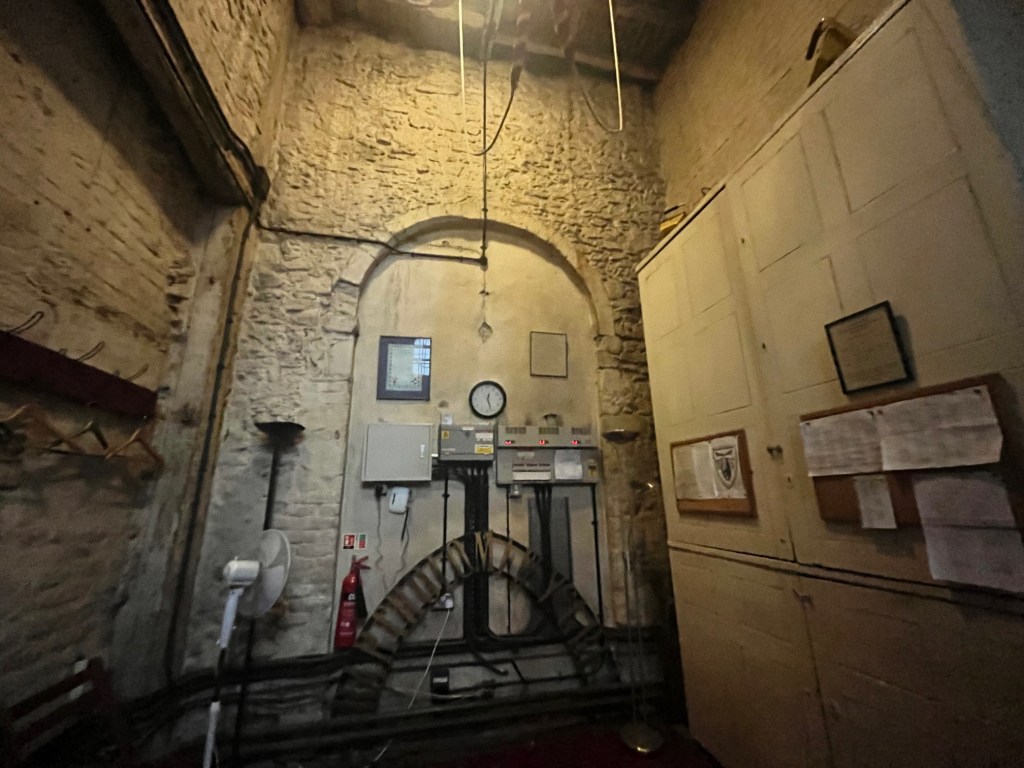
Going through a door to the right lead us to the bell ringing room. There are five ringing bells in the tower and they were cast by Thomas Bullisdon. The Tenor is 31 Inches, 5 cwt and rings the note ‘B’
What was quite peculiar was that the clock situated inside the bell ringing room was one of those ‘backward time clocks’. One that has all its numbers reversed and its hands going backwards! Neither Gordon or myself knew why this may be more helpful to the bellringers than a normal clock!
To the dismay of my mother, a long wooden ladder loomed behind us, in which the familiar tick of a Turret Clock mechanism could be heard right at the top.
The clock was made by John Thwaites of Clerkenwell (many people may recognise the name Thwaites from the company Thwaites and Reed which was formed 2 years after this clock was built) in 1814. Its a hour striking clock (2 train) and has an automatic night shut off system that stops at midnight and starts at 7am.
It has what I am sure is a recoil escapement (noting that there is a small amount of recoil for every tooth let past).
In fact, later that afternoon this exact Turret Clock was named during a lecture at the Annual Group Meeting of the AHS Turret Clock Group (It was a fantastic lecture by James Nye on the St Pauls Cathedral Clock)
Please see a photo of the clock below. Unfortunately amidst all my excitement about going up yet another clock tower, I did not get a very good photo of the clock tower mechanism. However, a nicer photo can be viewed on the St Barts website here

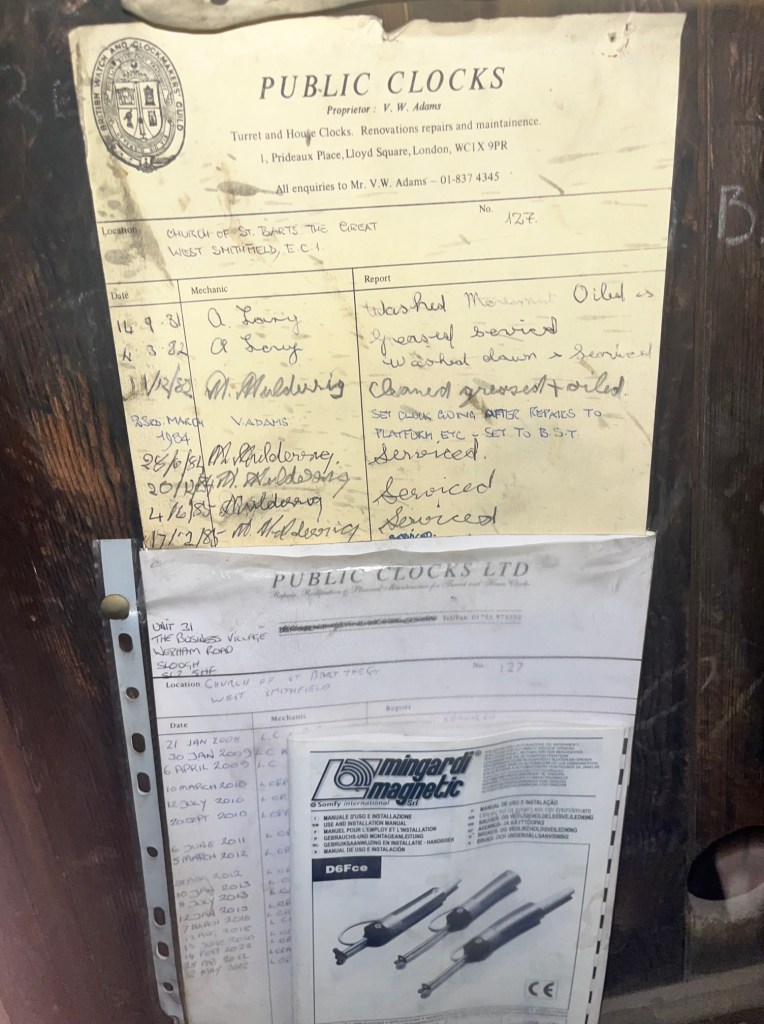
There were also some nice records of service on the inside doors of the clock case.
After studying the clock movement for a bit, we then ascended a very old staircase (as pictured below) to the belfry! This was the first church that I had gotten to see the bells from above and so it was a very cool experience.

Finally, our tour was ended by seeing the clock tower movement strike 12. It’s always fun to see Turret Clocks do their thing on the hour!
Thank you very much to Gordon for taking us up the clock tower! It was a very cool experience and I definitely enjoyed it!
On to the next one!
 Clockman's Adventures!