Adventures with Local Turret Clocks N.O4
St Marys’ Addington, Addington Village Rd, Croydon CR0 5AS
Adventures with local turret clocks continues with a visit to quite a nice church in Addington.
The church was founded around 1080 AD, replacing an earlier building on the same site. It is thought to be the oldest working public building in Croydon, with the chancel believed to be the oldest surviving part, dating from Saxon times!
The windows behind the altar date from c.1140, and in 1180 the first tower was built. This original tower was oblong rather than the current square tower. Restoration work in 1875 extended the tower to create an additional floor for the bellringers, who had previously rung from ground level and the roof was replaced in the 1980s.
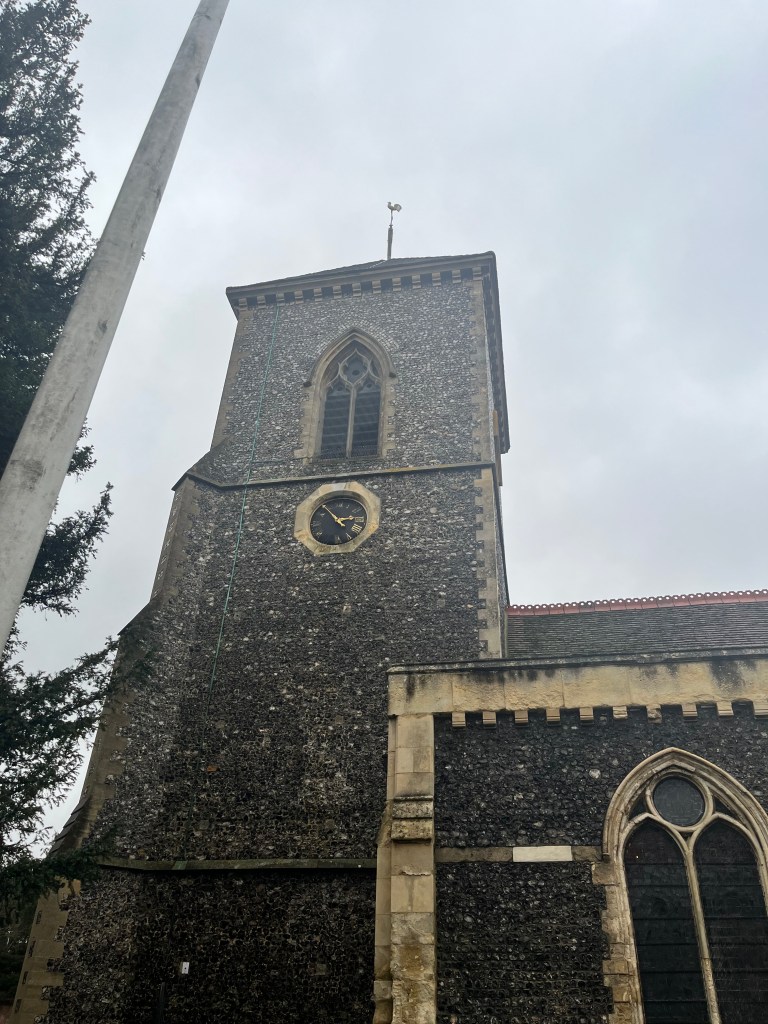
We entered the church at around 2:30pm, where we were greeted by Dave, who had kindly arranged and led the tower visit.
I immediately noticed the fantastic altar at the chancel part of the church. As already said above, it dates from the Saxon times!
Turning left from the entrance, we came to a door very similar to the main church door. Opening it revealed a familiar sight: a very narrow staircase, tucked directly behind the door (something that seems to crop up in every church!).
Emerging into the bellringing room, Dave points out a small clock case in the left corner, to the back of the room. Opening the case revealed a Gillett and Johnston twin train striking Turret Clock movement.
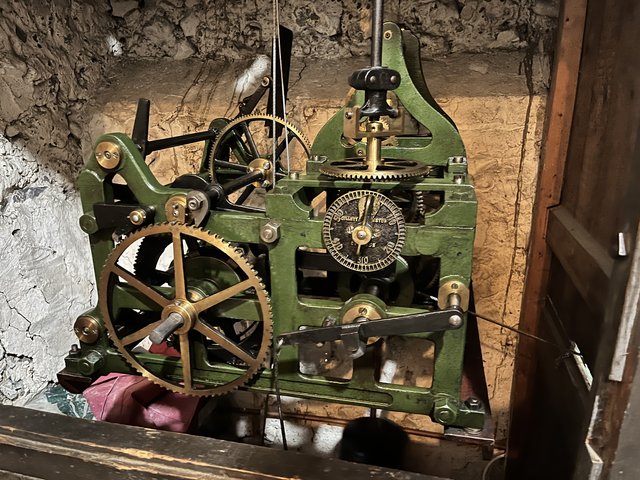
What immediately stood out was its size. Despite being a two-train clock, the mechanism is remarkably compact! Compared with the Gillett movement previously seen at Holy Trinity, Wandsworth, this example is significantly smaller.
This clock also uses a Pinwheel Escapement and is without a doubt, the smallest pinwheel I have yet encountered on a turret clock!
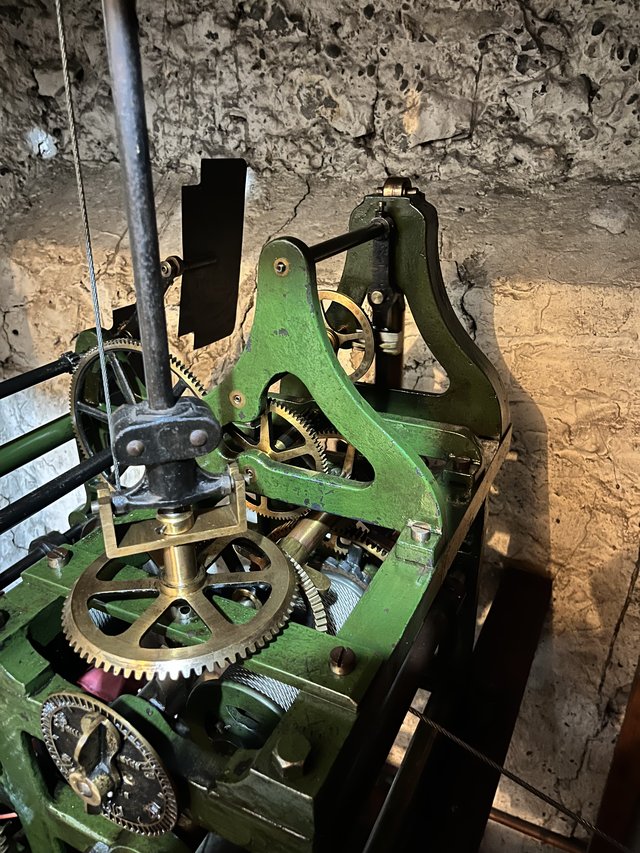
A look at the AHS Turret Clock Database lists a clock at St Mary’s as being by John Moore. Given the space available for the mechanism, it seems likely that a Moore clock originally occupied this position and was later replaced by the current Gillett & Johnston clock.
After studying the clock for a while, Dave asked if I would like to wind it! He explained that the clock is normally wound every Monday evening before bell-ringing practice, but I was given the opportunity to wind it a day early.
I quickly realised that I had underestimated just how much effort is required to wind both trains from nearly run down to fully wound — in one go!
The first few turns were fine, but it doesn’t take long before you start wondering exactly how many turns are still left to go… haha! It’s definitely not like winding a mantle clock at home, that’s for sure!
Once the weights were fully raised (and my arms suitably reminded that this isn’t a mantle clock!), Dave then offered to show us the bells.
There are 6 bells in the tower, the earliest dating from 1380 (as said on the St Mary’s website!).
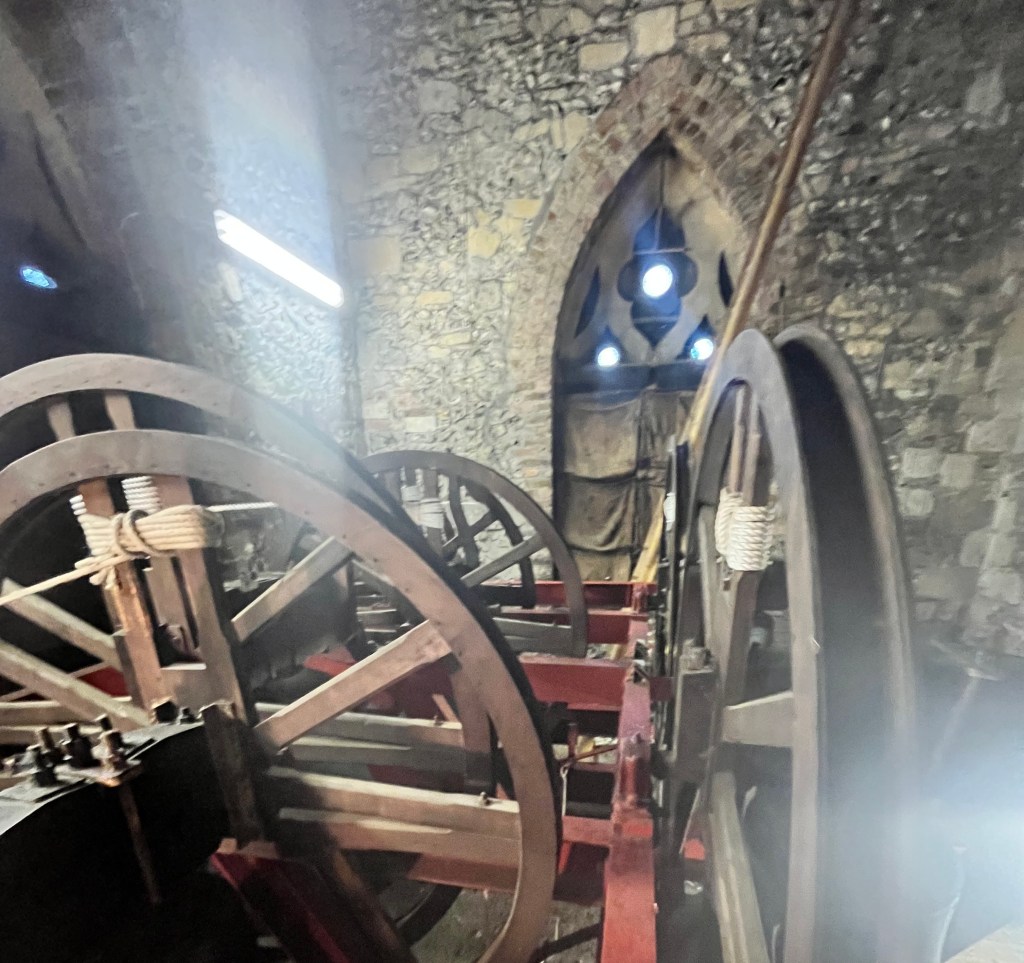
Unfortunately I did not manage to get a very good picture (I blame the camera!)
Finally, Dave was very kind in offering me to have a go at bellringing. I can say with confidence that… I have not improved one bit since Holy Trinity! I’ll get there in the end 😆
Thank you very much to Dave for taking us up the tower! It was a great experience and both my and my grandfather really enjoyed it!!!
On to the next one!
 Clockman's Adventures!